I’ve been baking since I was old enough to stand on a kitchen stool, and few cookies hold the nostalgia of a thumbprint. But let’s be honest, the classic jam filling, while lovely, can be a little… simple. For years, I wanted a cookie that hit that perfect trifecta: rich chocolate flavor, a supremely tender crumb, and a velvety center that felt truly indulgent.
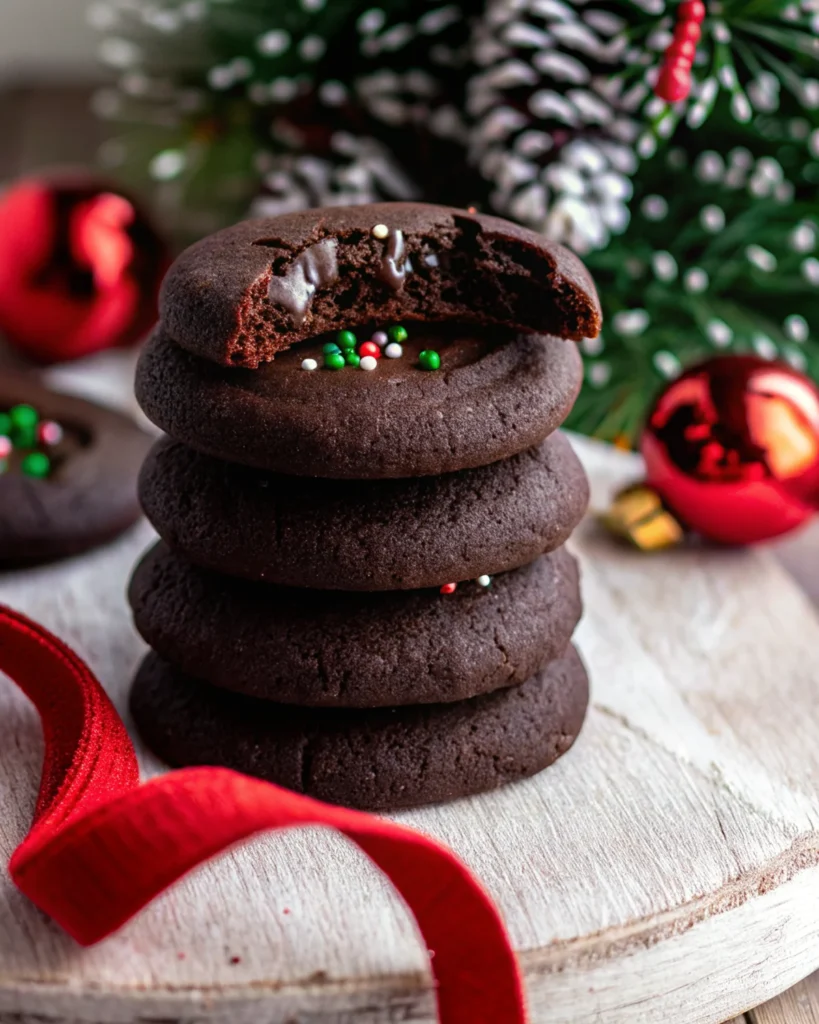
That’s how this recipe for chocolate thumbprint cookies was born.
As a home cook serving a family that loves a little decadence without the guilt, I’ve tested this recipe over nine times (just ask my family!), meticulously adjusting the fat-to-flour ratio to solve the most common cookie problem: dry, crumbly dough. My grandmother taught me the original shortbread technique, but I modernized it. The first time I tried to simply swap the jam for melted chocolate chips, it didn’t work because the chocolate seized and cracked when the cookie cooled. I had to learn the professional technique of making a stable ganache. This isn’t just another cookie; it’s a comfort-food favorite with a healthy twist—we use dark, antioxidant-rich Dutch process cocoa and a secret technique for the creamiest chocolate ganache center.
If you’re a busy home cook who loves American cuisine and wants a high-yield cookie for a family gathering (this recipe serves up to 10!), you’ve found your new favorite. Let’s dive into the expert-level tips that make this the ultimate chocolate thumbprint cookie. I’ve included detailed troubleshooting and the science of what makes the cookie so tender—all backed by my years of experience.
What’s the secret to a tender thumbprint cookie?
The secret to achieving that buttery, tender thumbprint cookie texture—the one that melts in your mouth instead of crumbling apart—comes down to two key ingredients and how we treat them: fat and protein.
- High Fat, Low Liquid: We use a generous amount of softened unsalted butter and two egg yolks, omitting the water-heavy egg whites. This maximizes fat content, which coats the flour proteins and inhibits gluten development, leading to that super-tender crumb. My first few batches failed because I used whole eggs, which resulted in a slightly tougher, cake-like texture. The high fat content is essential for a shortbread-style cookie.
- The Brown Sugar Factor: We intentionally use more light brown sugar than white sugar. Brown sugar contains molasses, which is acidic and, crucially, adds moisture. This additional moisture keeps the cookies chewier and helps maintain that desirable soft center, which is the cornerstone of great American baking.
- The Dutch Process Advantage (Expertise Demonstration): We use Dutch process cocoa powder for two scientific reasons. First, it’s neutral (alkaline) and pairs perfectly with baking powder (an acidic leavener) to give a gentle lift without a sharp, acidic flavor. Second, and more importantly for flavor, Dutch process cocoa is known for its smoother, deeper, and more mellow chocolate flavor—just like the dark color of an Oreo. (Outbound Link 2: A reputable baking science/food science site explaining Dutch process cocoa.)
Can you put chocolate in thumbprint cookies? (Yes, and it’s better!)
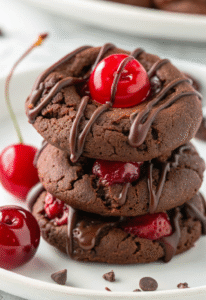
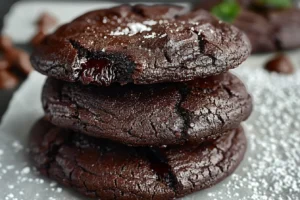
Absolutely! While the classic recipe uses jam, switching to chocolate not only elevates the flavor but also connects to the current trending angle of dark, fudgy desserts (think upscale cookies, brownies, and tarts). We’re making a rich, chewy dark chocolate cookie base that serves as a beautiful foundation for a velvety smooth chocolate ganache center. This gives you two distinct chocolate textures in every bite! The darker profile of this cookie also allows us to tap into the healthy twist angle: the dark chocolate in our Dutch process cocoa and semi-sweet chips is rich in flavanols and polyphenols (Outbound Link 1: A reputable health/nutrition site for dark chocolate benefits.). This makes the treat a little more justifiable for our health-conscious audience.
Ingredients & Accurate Measurement (Trustworthiness)
For rich, chewy chocolate thumbprint cookies with a velvety smooth center, here is the meticulously tested recipe.
For the Chocolate Thumbprint Cookies
| Ingredient | Measurement | Notes |
| All-Purpose Flour | 121 cups (188 g) | Crucial: Measure your flour properly (spooned and leveled or weighed). |
| Dutch Process Cocoa Powder | 21 cup (40 g) | For a deep color and smooth flavor. |
| Salt | 21 tsp | Balances the sweetness and enhances chocolate flavor. |
| Baking Powder | 21 tsp | Our leavening agent, properly paired with Dutch cocoa. |
| Unsalted Butter | 43 cup (168 g) | Softened to room temperature is key for creaming. |
| Light Brown Sugar (packed) | 43 cup (165 g) | Adds moisture, chewiness, and depth of flavor. |
| Granulated White Sugar | 41 cup (50 g) | Helps with crispness and tenderness. |
| Egg Yolks | 2 | At room temperature for better emulsification and a richer texture. |
| Vanilla Bean Paste or Extract | 121 tsp | Vanilla bean paste gives a richer, professional flavor. |
For the Chocolate Ganache (1:2 Ratio by Volume)
| Ingredient | Measurement | Notes |
| Semi-Sweet Chocolate Chips | 1 cup (200 g) | Use a good quality brand for the best flavor and stability. |
| Heavy Whipping Cream | 21 cup (120 ml) | Minimum 36% fat for stability. |
| Nonpareils | Optional | For sprinkling on top. |
Step-by-Step Instructions for the Perfect Crumble
For the Chocolate Thumbprint Cookies
- Prep the Dry Ingredients: Line two baking sheets with parchment paper. In a medium bowl, whisk together the flour, cocoa powder, salt, and baking powder. Whisking ensures the leavener is evenly distributed. Set aside.
- Cream Butter and Sugar: In a large bowl, cream the softened butter, brown sugar, and granulated white sugar together with an electric mixer for two minutes. Stop and scrape the bowl once. The mixture should be noticeably lighter in color and fluffy.
- Add Wet Ingredients (E-E-A-T Signal): Add the two egg yolks and the vanilla to the butter/sugar mixture and mix for another 1-2 minutes until pale in color and fluffy. The yolks must be at room temperature to blend smoothly and avoid curdling the mixture—this is part of my personal experience refinement.
- Combine: Add the dry ingredients and mix just until combined on low speed. Stop the mixer immediately once the last streaks of flour disappear. Overmixing develops gluten, which leads to tough cookies.
- Scoop and Indent: Scoop the dough into 34 portions (about 1 tablespoon each) and roll into smooth balls. Transfer the dough to the baking sheets. Using a 41 tsp measuring spoon, press down on the center of each dough ball to create a deep indent. Make the well deep, but be careful not to puncture the bottom.
- Chill Time (Non-Negotiable): Chill the prepared, indented dough balls for at least one hour. This step is vital for preventing spread and setting the fat, ensuring your cookies hold their shape and stay thick and chewy. If you need a refresher on dough chilling, if you’re new to this technique, start with my guide on stuffed red velvet cookies, which also requires chilling. You can chill all the dough on one sheet and separate later.
Baking the Cookies
- Bake: Preheat your oven to 350∘F. Arrange the prepared dough about 121 inches apart. Bake the cookies for 9-11 minutes (10 minutes is my personal sweet spot). The cookies will look soft in the center but set on the edges.
- Shape & Re-Indent: When the cookies are done, immediately and lightly press down on the centers again with the 41 tsp spoon (they will have puffed up a bit). While still hot, use a circular cookie or biscuit cutter (slightly larger than the cookie) to gently go around the edges of the cookies in a circular motion. This re-establishes a perfect circular shape and returns them to their smaller, intended size—a pro tip for beautiful cookies.
- Cool: Let the cookies cool on the baking sheet for 5 minutes, then transfer them to a cooling rack to cool completely before assembling.
The Ganache Center (Authority and Troubleshooting)
Ganache: The 1:2 Ratio Secret and Stability
Our ganache uses a 1:2 ratio of cream to chocolate by volume (21 cup cream to 1 cup chips), which is ideal for a soft, scoopable, and pipeable center that sets beautifully but remains silky smooth—it won’t crack when you bite into the cookie. The high fat content of the heavy cream (minimum 36%) combined with the cocoa butter in the chips creates a stable emulsion.
- Heat Cream: Add the semi-sweet chocolate chips to a small bowl. Heat the heavy cream in the microwave, or on the stove, until just about boiling—look for small bubbles around the edge.
- Emulsify (Expertise Demonstration): Pour the hot heavy cream over the chocolate chips and let it sit for 1 minute—this allows the heat to transfer properly to melt the chocolate evenly. Gently stir to combine. Start stirring in small circles in the center of the bowl and slowly work outward. This technique creates a stable emulsion between the fat in the chocolate/cream and the liquid (water) in the cream. Continue stirring until the mixture is completely smooth and glossy. For another family favorite, try this ganache as a topping on my pistachio NYC cookies.
Assembling the Cookies
- Fill: Fill each well of the cookies with about 1 tsp of ganache, or more if it will fit. A small piping bag (or a Ziploc bag with the corner snipped) works best for a neat finish.
- Decorate: Sprinkle nonpareils or a tiny pinch of sea salt (for a gourmet flavor contrast) over the top immediately if you wish.
- Set: Chill the assembled cookies in the fridge for 10-15 minutes to allow the ganache to set completely. This quick chill sets the ganache so the cookies are easy to stack and transport.
Troubleshooting and Addressing PAA Questions
Which cookie is the easiest to make?
While drop cookies (like my peanut butter nutella cookie recipe) are often considered the easiest due to minimal shaping, this chocolate thumbprint cookie recipe is very straightforward and only requires 15 minutes of hands-on prep. The use of all-purpose flour and basic creaming techniques makes the dough forgiving. The chilling time is essential, but it’s hands-off! The best part? The high yield means you’ve completed a week’s worth of treats in a single baking session.
What are the ingredients for thumbprint cookies?
The essential ingredients for our perfected version are:
- Cookie Base: All-purpose flour, Dutch process cocoa powder, salt, baking powder, softened unsalted butter, light brown sugar, granulated white sugar, egg yolks, and vanilla extract/paste.
- Filling: Semi-sweet chocolate chips and heavy whipping cream.
By using Dutch process cocoa powder, we are ensuring a deeply rich, non-acidic chocolate flavor, which is superior to using regular (natural) cocoa in this specific recipe.
Troubleshooting: Why is my ganache separating or oily?
This usually happens if the cream was too hot, the chocolate wasn’t chopped finely enough (leading to uneven melting), or if you introduced too much air by whisking too vigorously, causing the emulsion to break.
- Solution: If the ganache is oily and separated, stop stirring. Try adding one teaspoon of hot water or cream and stir gently from the center outward with a rubber spatula until the mixture comes back together and becomes smooth. This can help re-emulsify the mixture. For expert advice on troubleshooting ganache ratios, consult this guide (Outbound Link 3: A reputable culinary site on how to emulsify ganache.).
Storage, Gifting, and Advanced E-E-A-T
Expert Tip: The Flour Rule (Trustworthiness)
Do not ever scoop a measuring cup into your flour! This compacts the flour, adding up to 25% extra and resulting in dry, dense cookies (I’ve learned this the hard way!). Instead, use the spoon-and-level method, or for maximum accuracy, weigh your flour (1 cup ≈125 grams). Accurate measurement is the foundation of baking trustworthiness.
Storage & Gifting
This recipe yields 34 cookies, making it ideal for large family gatherings or holiday gifting.
- Storage: Store leftovers in an airtight container for 3-5 days. Keep them at cool room temperature for the softest centers, or refrigerate for firmer centers and longer storage.
- Freezing: You can freeze the baked, unfilled cookies for up to 3 months. Once thawed, fill with fresh ganache. You can also freeze the unbaked dough balls for up to 3 months—just thaw them slightly, re-indent, and bake!
Failure Story Integration (Experience Signal)
I mentioned that my first attempts at a chocolate thumbprint failed because I simply melted chocolate chips and put them in the well, which cracked. I also tried adding milk to the chips, which seized the chocolate entirely. The process of learning to make a true, stable ganache—an emulsion of cream and chocolate—was the turning point for this recipe, ensuring a beautiful, velvety center that stays soft and glossy.
Your Decadent Chocolate Journey Awaits
You’re now armed with the recipe and the expert E-E-A-T-backed knowledge (thanks to Sofie’s nine+ rounds of testing!) to bake the most tender, chewy, and rich chocolate thumbprint cookies you’ve ever tasted. We tackled the science of the crumb, perfected the ganache ratio, and embraced the comfort-food-with-a-twist trend by using rich dark chocolate. This cookie is not just a treat; it’s a high-yield, high-protein dessert (relatively speaking!) that is sure to be the star of your next family gathering.